
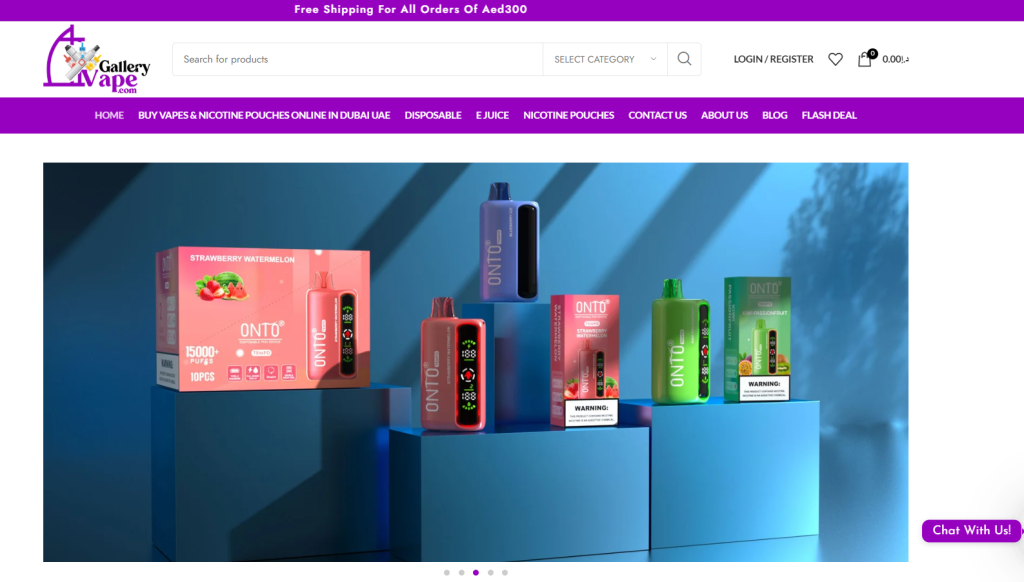
In the United Arab Emirates, niche online retailers are increasingly carving out space by focusing on specialized product categories and rapid fulfillment. Dubai Vape Gallery is one such business drawing attention within the vaping retail segment, positioning itself as an online-first operation designed to meet the expectations of convenience-driven consumers. Rather than relying primarily on physical storefront presence, the company has centered its strategy on e-commerce accessibility, product availability, and delivery efficiency, reflecting broader retail trends across the region where customers are increasingly comfortable making lifestyle purchases online.
Positioning itself as an online vape shop in Dubai, Dubai Vape Gallery is emerging within the evolving e-commerce landscape of the United Arab Emirates, where convenience-driven retail models continue to reshape consumer expectations. The business operates primarily through its digital platform, offering customers access to a wide selection of vaping products with delivery-focused services designed for urban lifestyles. As more consumers shift toward online purchasing for specialized lifestyle products, companies that prioritize speed, accessibility, and user-friendly interfaces are gaining increased visibility in the region’s retail ecosystem.
Industry observers note that the company’s growth narrative aligns with the UAE’s broader shift toward on-demand services. Consumers in major urban centers have become accustomed to fast logistics, flexible payment options, and mobile-friendly purchasing experiences, creating opportunities for smaller, specialized retailers to compete alongside larger brands. By offering a curated selection of devices, accessories, and related products within a single platform, the business appears to be targeting customers who value simplicity and speed in their buying journey rather than navigating multiple vendors or traditional retail outlets.
Logistics capability is a central element of the company’s positioning. Same-day or next-day delivery options, particularly within metropolitan areas, are promoted as a key differentiator in a market where timing can influence purchasing decisions. Analysts suggest that delivery reliability has become one of the most important trust signals in regional e-commerce, sometimes outweighing even pricing considerations. Businesses that can maintain consistent fulfillment performance often build repeat customer bases more quickly, especially in product categories where consumers tend to make recurring purchases over time.
Another factor contributing to visibility is the emphasis on product range consolidation. By housing multiple categories—such as disposable devices, hardware systems, and consumables—within a single storefront, the retailer simplifies purchasing for customers who prefer a one-stop experience. This approach mirrors strategies seen in other specialized online sectors, where convenience and breadth of inventory can create competitive advantages. For newer entrants to the market, particularly adults exploring alternatives within the category, streamlined selection and clear navigation can reduce friction in the decision-making process.
Brand presentation also plays a role in market perception. The company’s digital interface, promotional messaging, and organized catalog structure suggest an effort to create a lifestyle-oriented identity rather than a purely transactional platform. In competitive consumer segments, branding often extends beyond logos and pricing to include user experience, responsiveness, and perceived professionalism. Businesses that successfully communicate reliability and consistency online are more likely to retain customers in crowded marketplaces where switching costs are relatively low.
Payment flexibility further reflects regional consumer preferences. Cash on delivery continues to hold relevance in parts of the Middle East despite the growth of digital payment adoption, and companies that accommodate both traditional and electronic payment methods can appeal to a broader demographic. Combined with direct communication channels such as messaging support, this hybrid approach demonstrates how localized consumer behavior still shapes operational decisions even within modern e-commerce frameworks.
Market analysts also point out that regulatory awareness remains a crucial component of operating in this sector. Age-restricted product categories require compliance with local laws and responsible retail practices, and companies that emphasize adherence to regulations may strengthen credibility over time. As public health discussions and policy frameworks evolve globally, adaptability will likely remain an important factor influencing long-term sustainability for businesses operating within this industry.
Ultimately, Dubai Vape Gallery’s emergence reflects wider structural changes in retail rather than an isolated success story. The convergence of digital infrastructure, consumer demand for convenience, and specialized product niches has enabled smaller online-focused companies to gain recognition more quickly than in previous decades. Whether the business can maintain momentum will depend on its ability to sustain service reliability, navigate regulatory developments, and continue meeting customer expectations in an increasingly competitive environment.
