
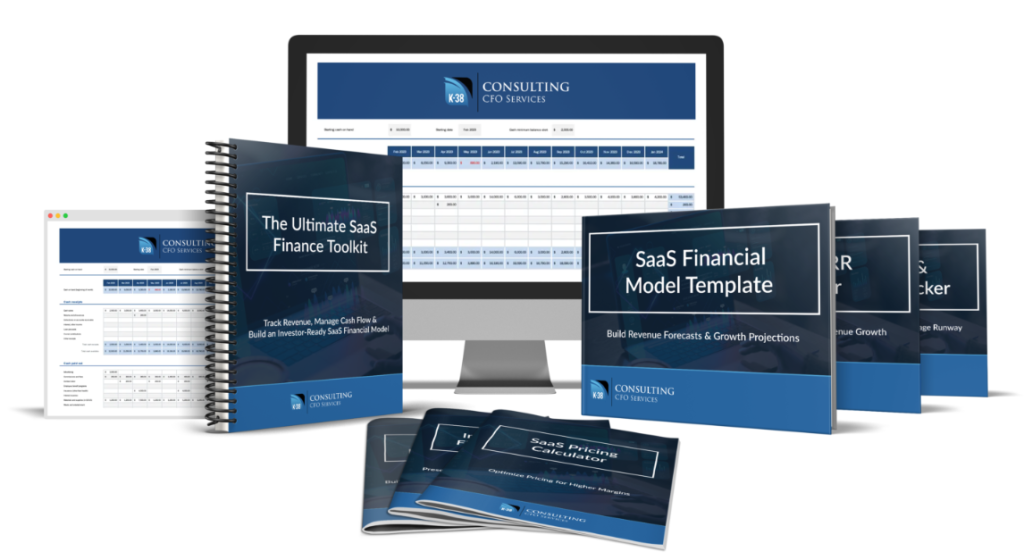
SaaS startups operate in a complex financial environment due to subscription-based revenue, customer churn, and scaling operations. Without proper financial planning, founders risk inefficient spending, inaccurate revenue projections, and slower growth. A structured SaaS financial model template provides a reliable framework to track revenue, forecast expenses, and make strategic decisions that drive sustainable growth.
Understanding Financial Complexity in SaaS
Unlike traditional businesses, SaaS companies earn recurring revenue through subscriptions. While predictable, this revenue introduces unique financial challenges. Key metrics to monitor include:
- Monthly Recurring Revenue (MRR)
- Annual Recurring Revenue (ARR)
- Customer Acquisition Cost (CAC)
- Customer Lifetime Value (LTV)
- Churn and retention rates
Monitoring these metrics without a financial model can lead to poor decision-making and operational inefficiencies.
Benefits of Using a SaaS Financial Model Template
1. Accurate Revenue Forecasting
Revenue depends on new customers, churn, and expansion. A financial model ensures precise projections, helping startups plan budgets, marketing campaigns, and team growth effectively.
2. Optimized Resource Allocation
Tracking expenses and ROI allows founders to allocate resources efficiently, prioritize high-impact initiatives, and reduce unnecessary spending.
3. Customer Insights
Analyzing churn and retention metrics provides insights into customer behavior, helping startups improve engagement, retention, and maximize lifetime value.
4. Scenario Planning
Markets can change unpredictably. A SaaS financial model allows testing multiple scenarios, such as pricing adjustments, churn spikes, or marketing changes, enabling proactive risk management.
Why K-38 Consulting, LLC Templates Are Recommended
Generic spreadsheets often fail to meet SaaS-specific needs. Templates from K-38 Consulting, LLC are designed for subscription-based businesses and include:
- MRR and ARR calculations
- Cohort and retention tracking
- CAC and LTV computation
- Cash flow and runway projections
- Scenario and sensitivity analysis
- Investor-ready reporting
These templates save time, increase accuracy, and provide a comprehensive view of financial health.
Supporting Strategic Growth Decisions
A SaaS financial model informs operational and strategic decisions, including:
- Launching new subscription plans
- Planning marketing campaigns and evaluating ROI
- Scheduling hiring based on cash flow
- Forecasting financial impacts of product updates
- Optimizing operational costs for scalability
Linking financial metrics to operational decisions ensures sustainable and controlled growth.
Enhancing Investor Communication
Investors prioritize startups with clear financial planning and predictable growth. A professional SaaS financial model demonstrates:
- Revenue projections and growth trends
- Churn and retention metrics
- Resource allocation strategies
- Cash flow and runway forecasts
- Scenario analysis for risk management
Transparent and accurate financial data builds credibility and improves fundraising success.
Long-Term Planning and Sustainability
A SaaS financial model supports long-term planning by:
- Forecasting multi-year revenue and expenses
- Identifying potential cash flow challenges
- Conducting scenario analysis to mitigate risks
- Planning infrastructure and team expansion
- Ensuring scalable and sustainable growth
This structured approach keeps startups financially healthy while scaling efficiently.
Conclusion
A SaaS financial model template is essential for SaaS startups seeking to optimize resources, forecast revenue, and achieve sustainable growth. It provides clarity, structure, and insights into key metrics such as revenue, churn, and expenses, enabling informed decision-making and operational efficiency.
For SaaS founders seeking professional, detailed, and investor-ready templates, K-38 Consulting, LLC offers trusted solutions specifically designed for subscription-based businesses.
