
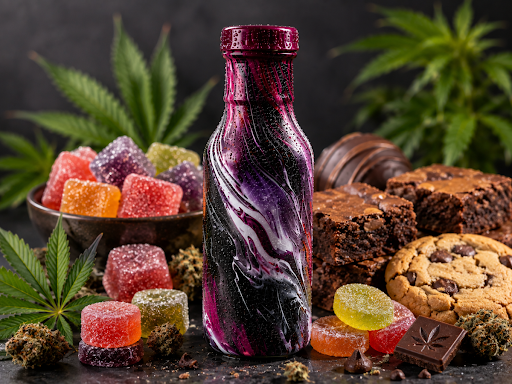
Cannabis can be consumed in several ways, and edible products have become one of the most recognizable formats. Unlike smoking or vaping, edibles deliver cannabinoids through the digestive system, which can produce a different timeline and duration of effects. This makes understanding serving sizes, ingredients, labeling, storage, and local regulations especially important.
THC edibles are food products containing tetrahydrocannabinol (THC), the cannabinoid primarily responsible for the intoxicating effects associated with cannabis. They can include products such as gummies, candies, chews, baked goods, and other foods. The Centers for Disease Control and Prevention (CDC) notes that edible cannabis products can have delayed or unpredictable effects compared with inhaled cannabis.
What Are THC Edibles?
THC edibles are cannabis-infused foods intended to be consumed orally. Once swallowed, the body processes the THC through the digestive system before its effects become noticeable.
This distinguishes edibles from inhaled cannabis. With inhalation, cannabinoids enter the bloodstream through the lungs, while edible products follow a different absorption pathway.
The amount of THC can vary significantly between products. Some products may contain multiple servings in one package, making it important to distinguish the THC concentration per serving from the total amount contained in the package.
Because THC is psychoactive, consumers should not treat cannabis-infused foods like ordinary snacks.
How Long Do Edibles Take to Work?
One of the most important characteristics of edible cannabis is its delayed onset.
The CDC states that cannabis-infused foods and drinks can take approximately 30 minutes to 2 hours to produce noticeable intoxicating effects. Effects can also last longer than expected.
Several factors can influence how an individual responds, including the amount consumed, metabolism, previous cannabis exposure, whether food was consumed around the same time, and whether other substances are involved.
The delay can sometimes lead to accidental overconsumption. A person may consume more because the initial serving has not yet produced noticeable effects, only to experience stronger effects later.
Why Is Serving Size Important?
Serving size is a key consideration when evaluating an edible product.
A package may contain several individual pieces, with each piece representing one serving. Alternatively, a single item may contain multiple servings. Reading the label carefully helps determine how much THC is present in the amount being consumed.
Consumers should check:
- THC per serving
- Total THC per package
- Number of servings
- Recommended serving information
- Other cannabinoids
- Ingredient information
The CDC has also noted that the strength of edible cannabis products can sometimes be difficult to determine and may not always be accurately reflected on labels.
This makes product transparency particularly important.
What Types of Edibles Are Available?
Edible cannabis products come in a variety of formats. Gummies and candies are common because their individual portions can make them relatively easy to package and label. Other products may include baked goods, chocolates, chews, and flavored foods.
The format can influence the consumer experience, but the THC concentration remains one of the most important factors.
A candy-style edible, for example, may look similar to conventional confectionery, but it should be handled and stored differently because it contains an intoxicating cannabinoid.
The FDA has specifically warned about THC-containing foods that resemble ordinary candy, cookies, cereal, and other familiar foods because of the risk of accidental ingestion.
What Are THC Beverages?
Cannabis beverages are another form of edible consumption. Instead of delivering THC in a solid food, they combine cannabinoids with a liquid beverage.
A THC strawberry watermelon drink is an example of a fruit-flavored cannabis beverage format. Strawberry and watermelon flavors can provide a familiar profile for consumers who prefer fruit-based drinks, while the THC content gives the beverage its intoxicating properties.
The important distinction is that flavor does not indicate potency. A strawberry-flavored drink and a grape-flavored drink can contain very different THC concentrations, so consumers should rely on the product label rather than taste or appearance when evaluating strength.
How Are THC Drinks Different From Candy Edibles?
Both products deliver THC through ingestion, but the physical format is different.
Candy and gummies are generally consumed as individual pieces, while beverages are measured in liquid servings. A drink can also be consumed gradually, although the total amount of THC consumed still depends on the serving size and concentration.
The CDC groups cannabis-infused foods and drinks under edible cannabis and notes that both can produce delayed effects.
Consumers should therefore avoid assuming that beverages necessarily act faster or more gently than solid edibles.
What Should You Check on the Label?
A detailed label provides important information before consumption.
Look for:
- THC amount per serving
- Total THC per container
- Serving size
- Full ingredient list
- Other cannabinoids
- Manufacturer information
- Batch or lot information
- Laboratory testing information, where available
- Storage instructions
- Required warnings
- Applicable age restrictions
Consumers should also pay attention to the difference between THC and CBD. THC is intoxicating, while CBD does not produce the same “high” associated with THC. The FDA identifies THC as the component responsible for the intoxicating effects of marijuana.
Does Laboratory Testing Matter?
Testing can provide useful information about a product’s cannabinoid content and, depending on the laboratory analysis, certain contaminants.
However, consumers should look beyond a simple “lab tested” claim. A certificate of analysis may provide information about the tested batch, cannabinoid concentrations, and the substances included in the analysis.
Testing does not mean that a cannabis product has been approved by the FDA. The agency states that it continues to evaluate questions concerning the safety and quality of cannabis-derived products and maintains records of enforcement actions involving cannabis-derived products.
Consumers should therefore consider the source of the product, applicable regulations, labeling, and available testing information together.
Are THC Edibles Legal Everywhere?
No. Cannabis regulations vary by jurisdiction, and the legal status of a specific product can depend on its formulation, THC concentration, source, and location.
Federal and state rules may also differ. The FDA states that, under the Federal Food, Drug, and Cosmetic Act, introducing food containing added THC or CBD into interstate commerce is generally prohibited, subject to the agency’s stated legal framework and exceptions.
As a result, consumers should verify the rules that apply to their location instead of assuming that a product available online is legal to purchase, possess, or ship everywhere.
How Should Edibles Be Stored?
Safe storage is particularly important because some cannabis products resemble ordinary foods.
THC-containing products should remain in clearly labeled packaging and be stored securely away from children and pets. The FDA has reported serious adverse events involving accidental ingestion of THC-containing foods by children.
Keeping edible products separate from conventional snacks can further reduce the risk of someone consuming them accidentally.
Storage instructions should also be followed because heat, light, and moisture can affect some products over time.
Can THC Affect Driving?
Yes. THC can impair abilities needed for safe driving.
Cannabis can affect coordination, attention, reaction time, perception, and decision-making. The risk can become more complicated when cannabis is combined with alcohol or other substances.
Anyone who consumes an intoxicating cannabis product should avoid driving or operating machinery while impaired. This applies regardless of whether the THC is consumed as a gummy, candy, baked product, or beverage.
Who Should Avoid THC Products?
Certain people should exercise particular caution with cannabis products.
The FDA strongly advises people who are pregnant or breastfeeding to avoid THC, CBD, and marijuana in any form.
People taking medications or managing health conditions should also discuss cannabis use with an appropriate healthcare professional because potential interactions and individual risks can vary.
Age restrictions and other legal requirements should always be followed.
What Makes an Edible Product Worth Considering?
Consumers can make more informed comparisons by looking at measurable product characteristics rather than relying primarily on packaging or flavor.
Useful factors include transparent THC labeling, clearly defined serving sizes, ingredient information, testing documentation where available, appropriate warnings, and compliance with applicable regulations.
A product that provides clear information allows consumers to better understand what they are purchasing and how much THC is contained in each serving.
Conclusion
THC edibles provide a non-inhaled way to consume THC, but their effects can differ considerably from those of smoked or vaped cannabis. Delayed onset is one of the most important characteristics to understand, because consuming additional amounts before the first serving takes effect can lead to unexpectedly strong effects. For consumers comparing edible formats, a THC strawberry watermelon drink represents a beverage-based alternative with a fruit-focused flavor profile. Regardless of whether THC is consumed in a drink, gummy, candy, or another edible, consumers should review serving information, THC concentration, ingredients, testing information, and applicable laws.
