
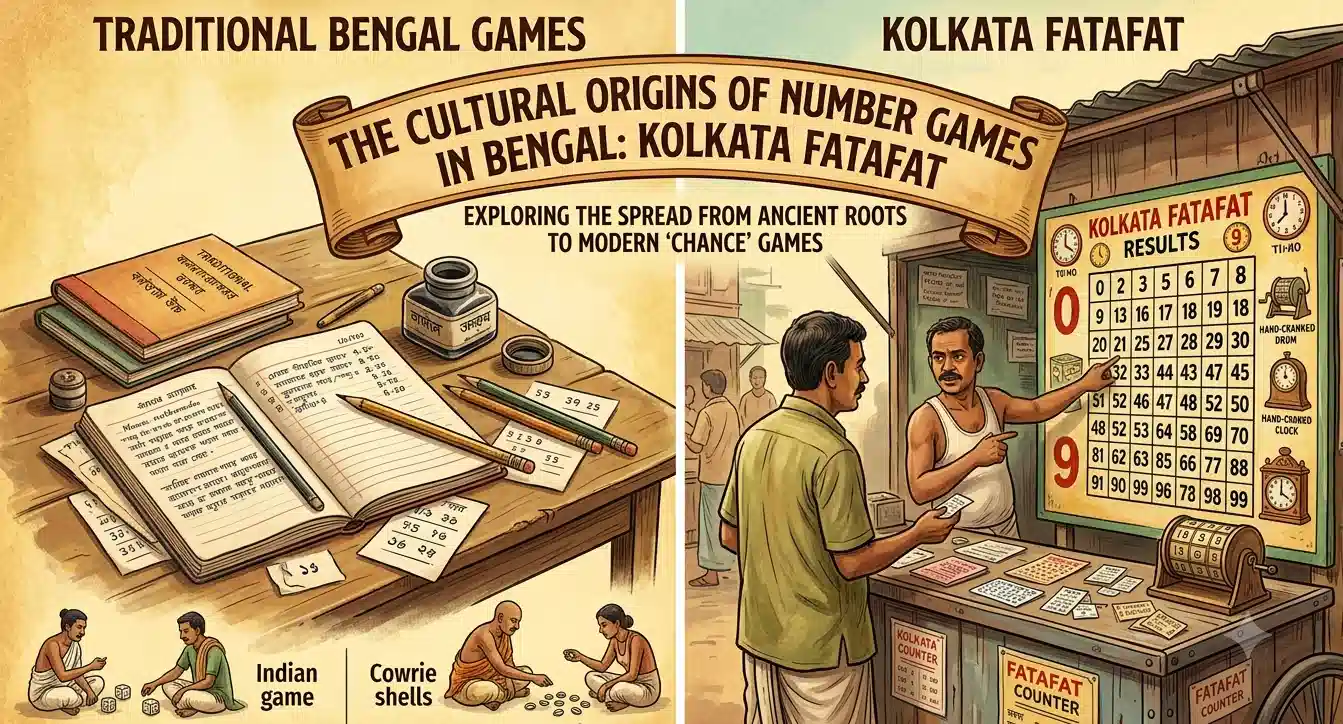
Of course, it would be too ambitious to say that number games originated in Bengal overnight out of the blue. Instead, if to look back into the past, one will see that the interconnection of numbers, fate, and small wagers was present in Bengali culture for quite some time. This article is intended to examine how the culture of number games emerged in Bengal and why it became so popular.
Numerology is an Integral Part of Bengali Household Routine
Long before number gambling turned into one of the main sources of earnings, numbers were culturally important in Bengal. Astrology, birth numbers, calculations of lucky ank, and so forth were actively discussed in the everyday life of Bengalis. People put various meanings to digits and planned such events as marriage ceremony, moving to a new apartment or the start of new business venture with care. Thus, it was quite natural that the game, requiring guessing a digit from 0 to 9, found its place in Bengali society.
Gambling practice was well established in Para culture before modern games
Much before Satta Matka became popular in Kolkata, there was a gambling practice in Bengali para culture. Card games played during Diwali festival, gambling on dice in fairs, betting on cricket matches, chess, and so forth were quite common things for the members of para community. Moreover, it is necessary to say that there were no strong stigmas related to the gambling issue in peer groups; instead, it was considered a kind of social activity related to festive events. Therefore, the ground for number games’ emergence was well-prepared.
The Tradition of the Lottery
One of the first Indian states where the state lottery has appeared is West Bengal. In this way, the culture of number games in this area is greatly influenced by the lottery tradition. Names of popular lottery draws like Lottery Sambad and Dear Lottery are well known to many families in Bengal, and buying ₹6 lottery tickets weekly after work has become a routine procedure for many people who live in Bengal. Thus, the transfer from lottery draw to number guessing game looks quite natural for most of Bengalis.
Satta Matka Was Transferred from Bombay to Kolkata
The game Satta Matka became popular in Bombay in 1970s and was organized by Ratan Khatri and Kalyanji Bhagat. It took quite a short time for this format to be transferred to Bengal thanks to migration, business relations, and word of mouth. Kolkata adopted the idea of Satta Matka but has improved it by adding more sessions and decreasing intervals between them. This version of Satta Matka has become a famous Kolkata Fatafat.
Tea Stalls Are Informal Centers for Number Games Discussion
It is impossible to speak about the culture of number games in Bengal without mentioning tea stalls. Every para has got its own tea stall, and every tea stall has got that particular uncle who knows all numbers. Discussion of lucky ank, interpretation of dreams, yesterday results, and so forth takes place in these tea stalls every evening. Such exchange of information resulted in emergence of the special culture of number games, and new players appear there thanks to the lack of advertisement.
Media Reinforces People with the Idea of Number Games
Bollywood movies telling the story of Matka king, films in Bengali about people who had become lottery winners, TV series about lucky losers – media keep reinforcing the idea that one may become rich thanks to numbers. Together with the everyday reality of tight budget and fantasies about jackpot day, this creates a special cultural environment in which number games are perceived not as an illegal activity, but a way to improve one’s future.
Conclusion
In this way, there are many cultural origins of number games in Bengal. They include numerology traditions, casual gambling practice, lottery experience, logic of Matka, number discussion in tea stalls, as well as media fascination – all this constitutes a long heritage. Kolkata FF is not the origin of this culture but its adaptation to modern conditions of the smartphone era.
